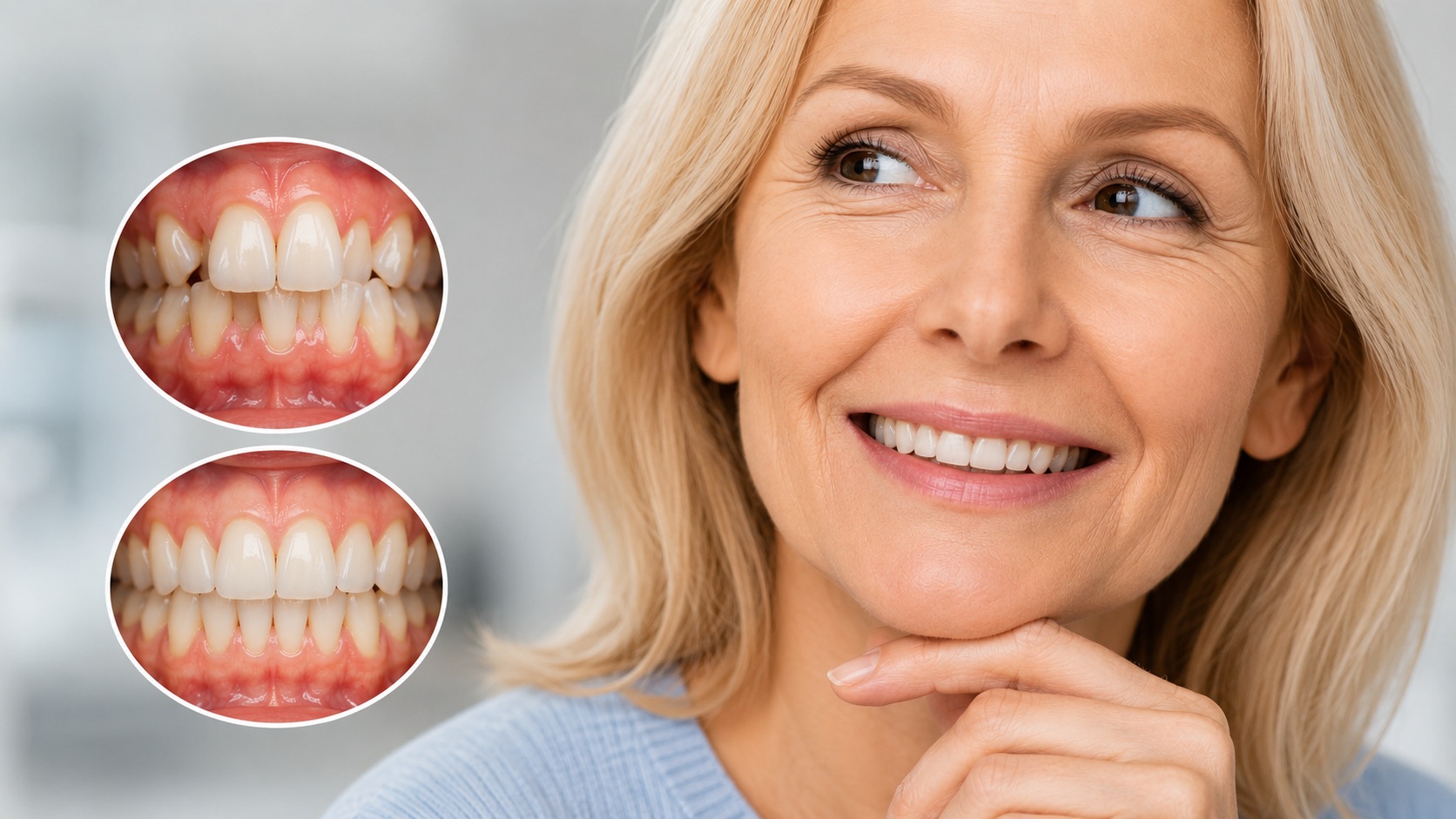
If you’ve noticed that your teeth seem more crowded, crooked, or misaligned than they used to be, you’re not imagining it. Teeth can shift throughout adulthood due to natural aging, changes in the jawbone, tooth loss, gum disease, and everyday wear. Fortunately, modern orthodontic treatments like Invisalign® can help restore and protect your adult smile.
Many adults are surprised to discover that orthodontic concerns aren’t limited to teenagers. In fact, adult orthodontics is one of the fastest-growing areas of dentistry because more people are seeking ways to improve both the appearance and health of their smiles.
Understanding Why an Adult Smile Changes Over Time
Your teeth are not permanently fixed in place. They are supported by bone, ligaments, gums, and surrounding tissues that continue to change throughout your life.
As you age, subtle changes can occur that gradually affect tooth position. While these movements may seem small at first, they can become noticeable over the years.
Common signs of tooth shifting include:
- Crowding of the lower front teeth
- New gaps between teeth
- Changes in your bite
- Teeth that appear crooked in photos
- Difficulty flossing between certain teeth
- Increased tooth wear
These changes can impact both aesthetics and oral health.
Common Causes of Teeth Shifting With Age
Natural Aging and Jaw Changes
One of the most common reasons an adult smile changes is the natural aging process.
Over time:
- Jawbone density can decrease
- Facial structures gradually change
- Soft tissues lose elasticity
- Teeth experience years of chewing pressure
These factors can cause teeth to drift slightly out of alignment.
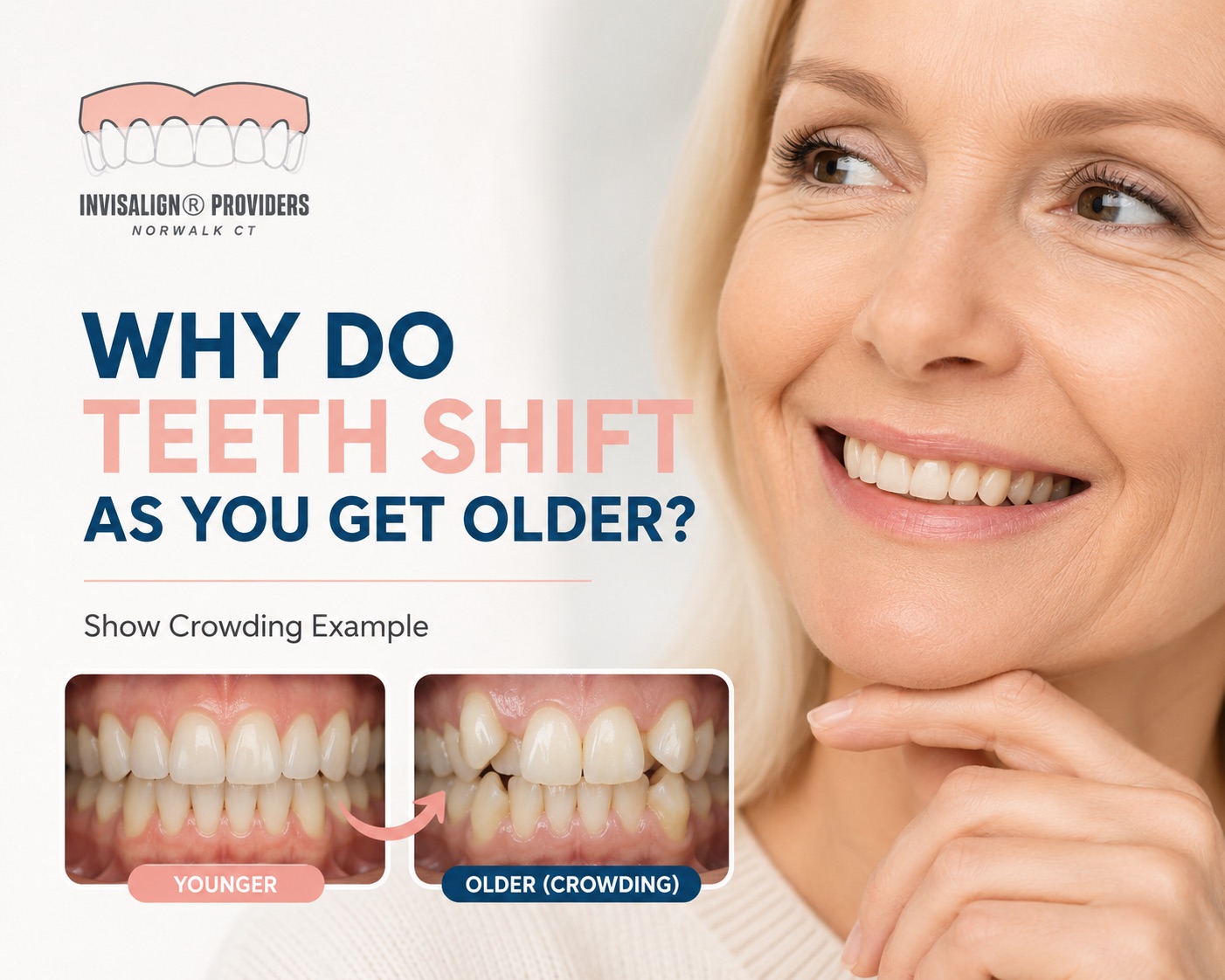
Many adults first notice this phenomenon in their lower front teeth, which often become crowded even if they were once straight.
Teeth Grinding and Clenching
Bruxism, or teeth grinding, is another major contributor to tooth movement.
Many people grind or clench their teeth during sleep without realizing it. The constant pressure can:
- Shift teeth positions
- Wear down enamel
- Create bite imbalances
- Cause jaw discomfort
Over time, these forces can significantly alter the alignment of your adult smile.
Gum Disease and Bone Loss
Healthy gums help support stable tooth positioning.
When periodontal disease develops, the supporting structures around teeth can weaken. As bone loss progresses, teeth may:
- Loosen
- Drift apart
- Rotate
- Change position
In many cases, adults who notice new gaps between teeth may actually be experiencing early signs of gum disease.
Missing Teeth
When a tooth is lost and not replaced, neighboring teeth often begin to move into the empty space.
This can create:
- Crowding
- Tilting teeth
- Bite problems
- Uneven wear
Even the loss of a single tooth can affect the alignment of your entire smile over time.
Wisdom Teeth Pressure
Although wisdom teeth are not always responsible for crowding, they can contribute to changes in tooth alignment in some cases.
If wisdom teeth erupt improperly or become impacted, they may create pressure within the dental arch that affects nearby teeth.
Your dentist can determine whether wisdom teeth are contributing to changes in your adult smile.
Can Teeth Shift Even After Braces?
Yes.
Many adults who had braces as teenagers are surprised to discover that their teeth have shifted years later.
This often occurs when retainers are not worn consistently after orthodontic treatment.
Teeth naturally tend to move back toward their original positions, a phenomenon known as orthodontic relapse.
Retainers play a critical role in maintaining long-term alignment.
Why Straight Teeth Matter Beyond Appearance
A straighter smile does more than improve confidence.
Proper alignment can also support better oral health by making it easier to:
- Brush effectively
- Floss thoroughly
- Reduce plaque buildup
- Prevent uneven tooth wear
- Lower the risk of gum disease
When teeth are crowded or overlapping, cleaning becomes more difficult, increasing the likelihood of cavities and periodontal problems.
Maintaining a healthy adult smile often contributes to better long-term dental health.
How Invisalign® Can Help Correct Adult Tooth Shifting
A Modern Solution for Adult Orthodontics
Many adults hesitate to pursue orthodontic treatment because they don’t want traditional metal braces.
Invisalign® offers a discreet and comfortable alternative.
Using a series of custom-made clear aligners, Invisalign® gradually moves teeth into their ideal positions without brackets or wires.
Benefits include:
- Nearly invisible appearance
- Removable aligners
- Easier brushing and flossing
- Fewer dietary restrictions
- Comfortable fit
For busy professionals and adults, Invisalign® provides a convenient way to improve an adult smile while maintaining confidence throughout treatment.
Conditions Invisalign® Can Address
Invisalign® can effectively treat many common adult orthodontic concerns, including:
- Mild to moderate crowding
- Gaps between teeth
- Overbite
- Underbite
- Crossbite
- Relapse after previous braces
Every smile is unique, which is why a professional evaluation is essential.
How to Prevent Further Teeth Shifting
While some age-related changes are unavoidable, there are several steps you can take to protect your smile.
Wear Your Retainer
If you’ve had orthodontic treatment in the past, wearing your retainer as instructed is one of the best ways to maintain alignment.
Maintain Excellent Oral Hygiene
Healthy gums provide crucial support for your teeth.
Be sure to:
- Brush twice daily
- Floss every day
- Schedule regular dental cleanings
- Address gum disease promptly
Replace Missing Teeth
Dental implants, bridges, and other restorative solutions can help prevent neighboring teeth from drifting into empty spaces.
Address Teeth Grinding
If you grind your teeth, your dentist may recommend a custom nightguard to reduce excessive pressure on your teeth and jaw.
Schedule Regular Dental Exams
Routine checkups allow dental professionals to identify early signs of shifting before they become larger problems.
When Should You Consider Invisalign®?
You may benefit from an Invisalign® consultation if:
- Your teeth appear more crowded than before
- You notice new gaps developing
- Your bite feels different
- You struggle to clean between overlapping teeth
- You previously had braces but your teeth have shifted
- You’re unhappy with changes in your adult smile
The sooner treatment begins, the easier it may be to correct alignment issues and prevent further movement.
Frequently Asked Questions
Why do teeth become crooked with age?
Teeth can become crooked due to natural aging, jawbone changes, gum disease, teeth grinding, tooth loss, and orthodontic relapse. These factors can gradually cause teeth to shift throughout adulthood.
Can Invisalign® fix teeth that shifted years after braces?
Yes. Invisalign® is often used to correct orthodontic relapse and can help realign teeth that have shifted after previous braces treatment.
At what age do teeth stop shifting?
Teeth never completely stop moving. Although the rate of movement is usually slow, changes can continue throughout adulthood due to aging and other factors.
Is teeth shifting a sign of gum disease?
Sometimes. New gaps, loose teeth, or noticeable movement can be associated with periodontal disease. A dental evaluation can determine the underlying cause.
How long does Invisalign® treatment take for adults?
Treatment length varies depending on the complexity of the case. Many adults complete Invisalign® treatment within 6 to 18 months, though some cases may require more or less time.
Protect Your Adult Smile With Invisalign®
Noticing crowding, gaps, or shifting teeth as you get older? Invisalign® can discreetly straighten your smile and help prevent further alignment issues. Take the first step toward a healthier, more confident adult smile today.
📞 (203) 945-0068
📍 454 Main Ave St.1, Norwalk, CT 06851
Teeth shifting is a natural part of aging for many adults and can result from jaw changes, gum disease, teeth grinding, tooth loss, or orthodontic relapse. Invisalign® offers a comfortable, discreet solution for correcting alignment issues and preserving a healthy adult smile. Early intervention can help prevent more significant dental problems and restore confidence in your smile.
GET IN TOUCH